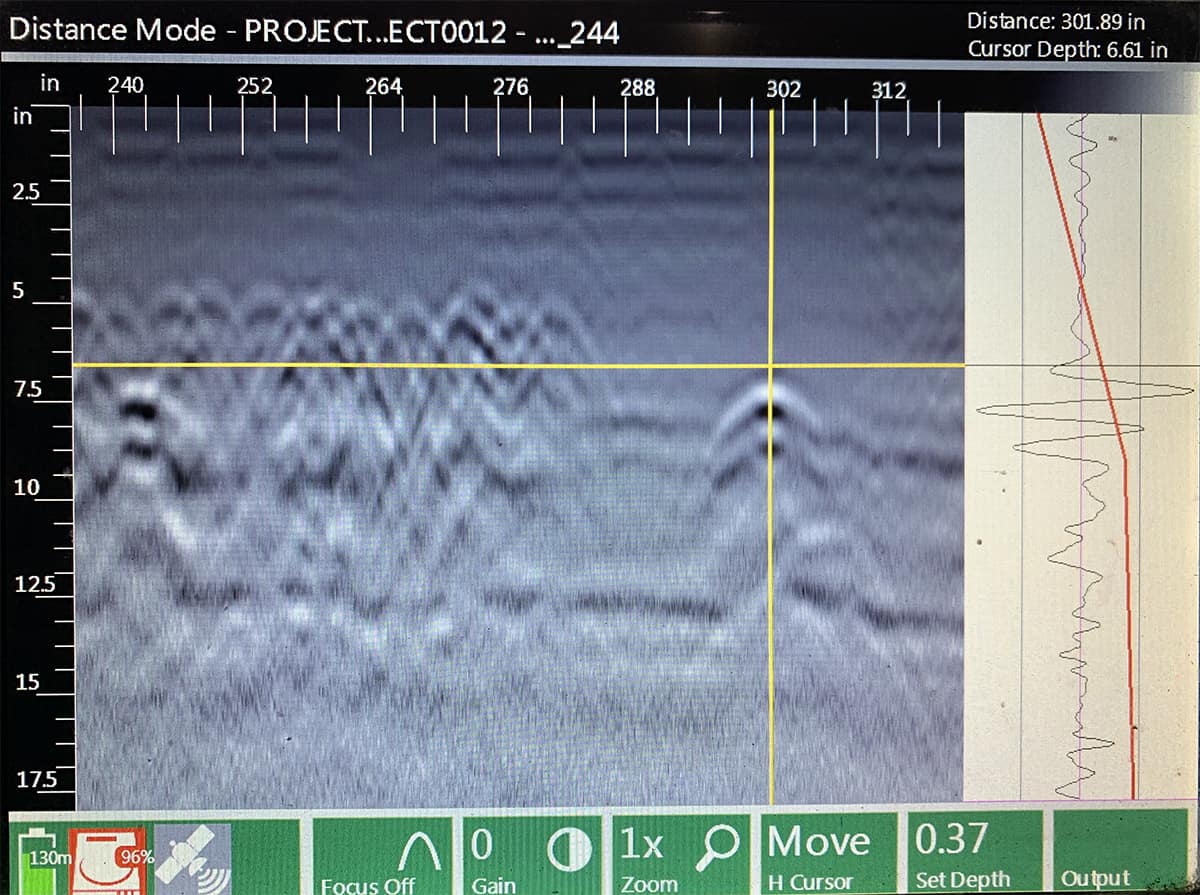
This is a real scan from a real job: not a stock photo. Our concrete scanning puts every rebar, post-tension cable, conduit, and void on screen with ground penetrating radar, then marks it on your slab before you ever bring out the saw. Serving contractors across all of Washington from Seattle and the Orlando metro in Central Florida: typically next-day.
Concrete scanning is X-ray vision for your slab.
How it works
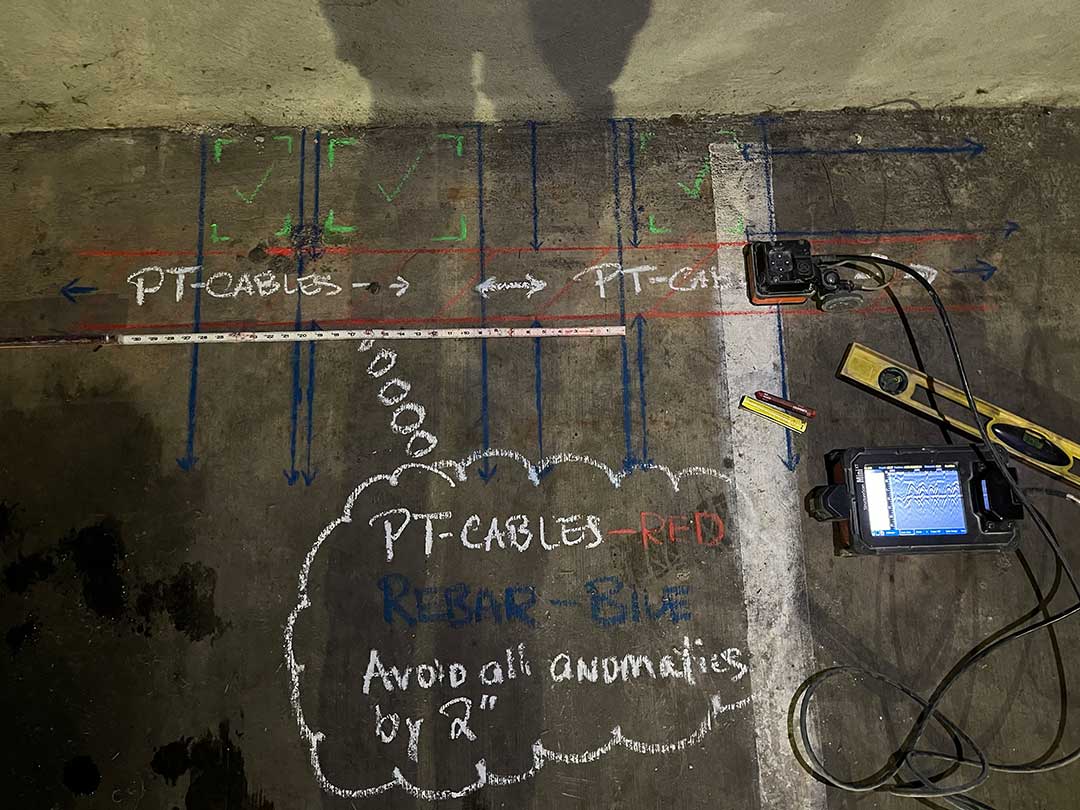
The unit sends a signal into the slab and reads what bounces back. A trained technician maps the rebar mat, live post-tension cables, electrical conduit, plumbing, and the voids hiding below the surface, then marks it all on the concrete where you’re working, in standard APWA colors.
Why it matters
The most expensive mistake on a concrete job is the one you can’t see coming. Cut a post-tension cable and you can trigger a violent release, injure a crew member, and stall the project for weeks. Nick a conduit and you’re into an electrician and a change order. Scanning first turns a guess into a plan.
⚠️ Hitting a live PT cable isn’t a patch-and-move-on mistake. It’s a safety incident and a schedule killer. A 20-minute scan is cheap insurance against a five-figure problem.
Everything in the slab: marked in the industry’s own colors.
We don’t hand you a report full of jargon. We mark the concrete where you’re working, in standard APWA colors, so your crew knows exactly where it’s safe to cut before the saw comes out.

Built for every kind of concrete you’ll cut into.
From post-tensioned parking decks to hollow-core planks, the structure changes what’s inside, and how we scan it. A few of the jobs we do most across Washington and Florida.
Post-tensioned decks
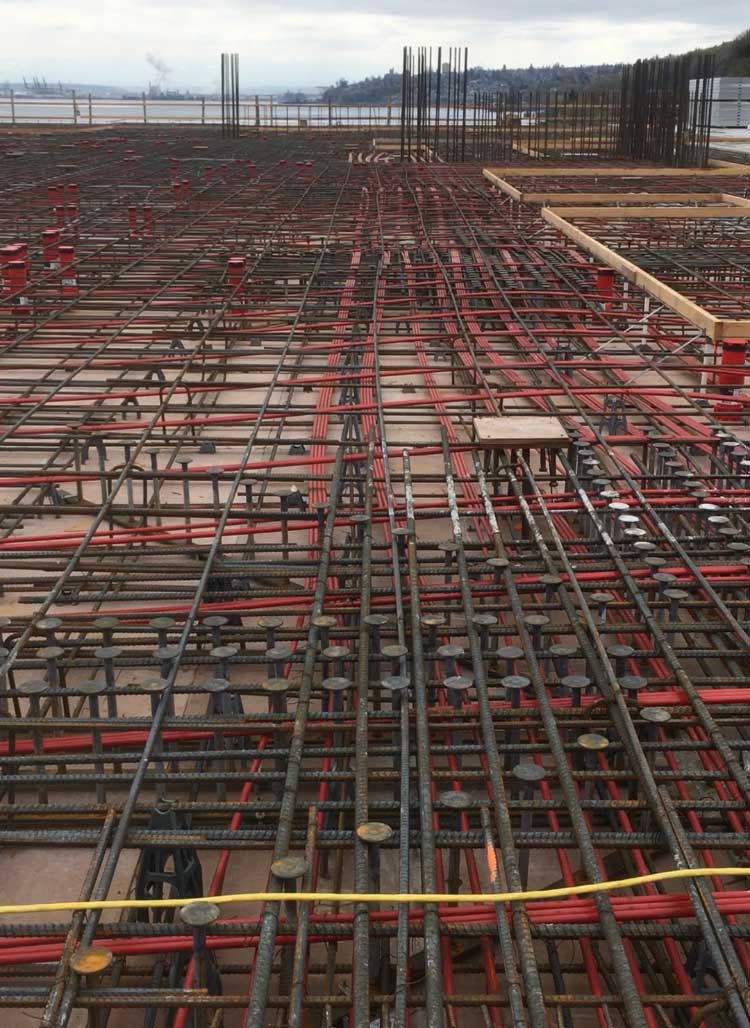
We locate every live PT cable before you core so your crew can drill and cut without risking a cable strike on a tensioned deck.
Structural & slab-on-grade
We map the rebar mat, measure slab thickness, and confirm cover before you anchor or saw-cut, no guessing where the steel runs.
Hollow-core & waffle slabs
We identify cores, ribs, and voids so your penetrations land in solid material instead of punching through a hidden cavity.
Block & CMU walls
We find grouted versus hollow cells and any embedded reinforcement before you anchor into or core through a wall.
Beams & columns
We locate rebar, stirrups, and tendons in load-bearing members, where a wrong cut is a structural problem, not a patch.
Precast & composite decks
We scan preformed panels and composite metal decks so you can place fasteners and openings with confidence, not a best guess.
Scan. Mark. Document.
We scan
A technician grids the area with GPR and reads the returns live on-site: no lab, no waiting on a report to keep working. Most scans finish in under 15 minutes per location.
We mark
Targets go straight onto your slab in APWA colors: cables, rebar, conduit, and clear-to-cut zones your crew can see and work around the moment we leave.
We document
You get photos and a written record of what we found and where, so the scan holds up for the GC, the inspector, and the permit file. A verbal “you’re good” doesn’t.
Scans from the field, not stock photos.
A few recent Pacific-Northwest scans. Every job is documented, these are ours, not a stock library.
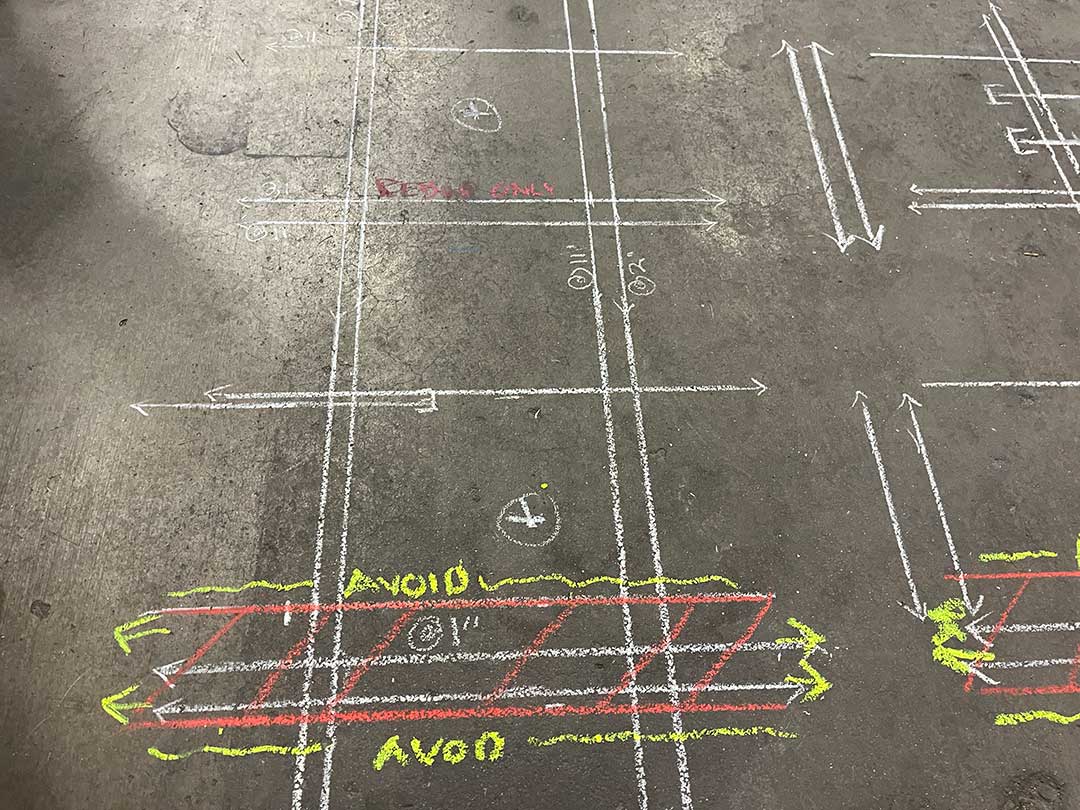
Boeing machine installation

Sound Transit light rail
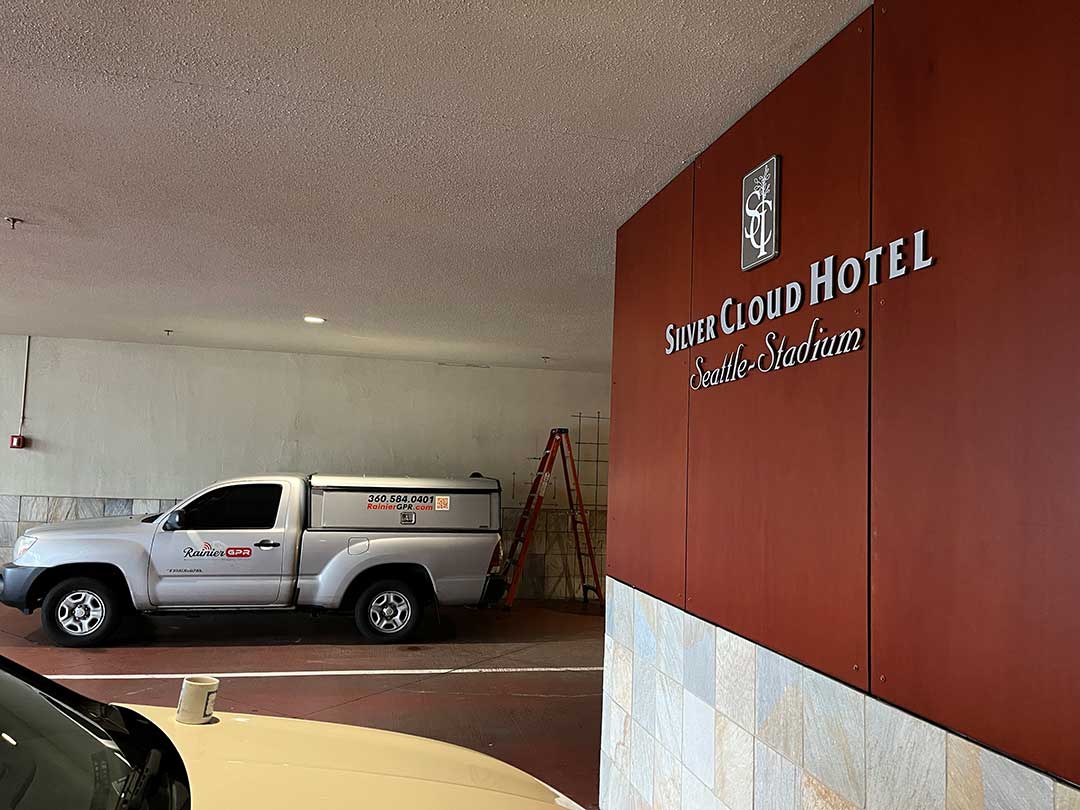
Silver Cloud Stadium Hotel
A 5.0-star crew, in their words.
Matthew did a fantastic job. I hired him to scan my concrete ceiling for rebar, conduit, and PT (post-tension) cables/tendons before drilling a few holes for a projector mount. Thankfully the scan came back clean and we were able to drill exactly where I wanted, but the tail risk of going in blind on a PT slab is… let’s just say “financially unmotivating.” I’m really glad I didn’t gamble it.
Had them out to scan a slab and lid to find PT cables and any other hidden surprises. Showed up on time, did great work, very detailed markings and explanation.
Tony, the owner, answered the phone on the second ring and had the guys show up to do 15 scans the next day. Checked in with me periodically and we walked the scope together to make sure we didnt miss anything. I haven’t gotten service that prompt and good from the big guys in a long time. Thanks Tony, Landry, and Cameron!
Straight talk on price.
Most contractors just want a number and an honest answer on what moves it. Here’s ours, no “call for pricing” runaround. Every job is quoted before we roll a truck, and the scan pays for itself the first time it keeps a saw out of a live cable.
Ranges are typical, not a quote. Tell us the job and we’ll give you a real number, usually the same day.
Two markets, one standard.
What ground penetrating radar sees inside your slab
Concrete scanning with ground penetrating radar is non-destructive imaging: the antenna sends high-frequency radio pulses into the slab and reads the reflections that bounce back off anything denser than the concrete around it. On a typical scan we resolve the rebar mat, live post-tension cables, electrical conduit, radiant-heat tubing, slab thickness, and the voids beneath slab-on-grade. The exact hazards that turn a routine cut or core into a structural repair or an electrocution risk. Nothing is drilled, nothing is exposed to radiation, and the area never has to be evacuated.
Where concrete scanning really earns its keep is post-tensioned construction. Seattle and the Orlando metro are full of PT slabs and elevated decks. Hit a tensioned cable and you’re not patching concrete, you’re staging an emergency repair and pulling a crew off schedule for weeks. We map every cable run in your work area, mark the safe cut-and-core zones directly on the slab in APWA colors, and hand you a same-day field report your GC and engineer can file. That combination (scan, mark, document) is what separates a professional locate from a guess with a rebar detector.
Compared with concrete X-ray, GPR needs access to only one side of the slab, involves zero radiation (no clearing the floor, no radiation permits) and scans most locations in about fifteen minutes. That’s why ground penetrating radar has become the default for concrete imaging on occupied buildings, hospitals, schools, parking structures, and active job sites across Washington and Central Florida. If you are cutting a doorway, coring for plumbing, trenching a slab, or anchoring a machine base, the scan comes first, and the whole job runs cleaner because of it.
Scanning question? Call the local line, WA (360) 584-0401 · FL (407) 493-3525, or read the answers below.
Concrete scanning, answered straight.
Scan it before you cut it.
Send us the job and we’ll get you a real quote, usually same day, and a crew on site as soon as next-day.