BIT 4.00 IN   SCAN: CLEAR   CORE_0038
Concrete Core Drilling
We scan before we core.

Concrete core drilling with the GPR scan built in. We locate the rebar, post-tension cables, and conduit hiding in the slab first, then core clean, exact holes for plumbing, electrical, HVAC, drains, and anchors: one crew, one visit. Serving all of Washington from Seattle and the Orlando metro in Central Florida, typically next-day.
★★★★★ 5.0 GoogleScan-first, one crewWA + FL
RAINIER-GPR · PRE-CORE SCAN● REC
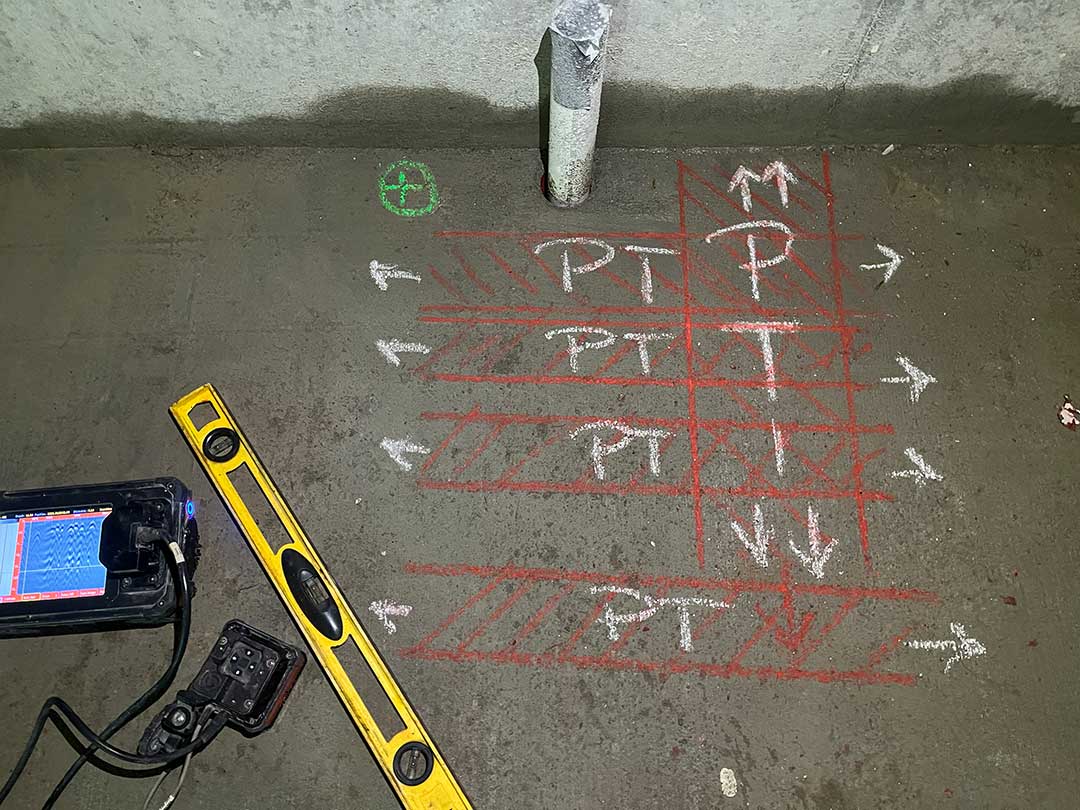
Post-tension cable layout chalked on a GPR-scanned deck before core drilling
REBAR MAPPED  ·  PT CABLES MARKED  ·  CORE APPROVED
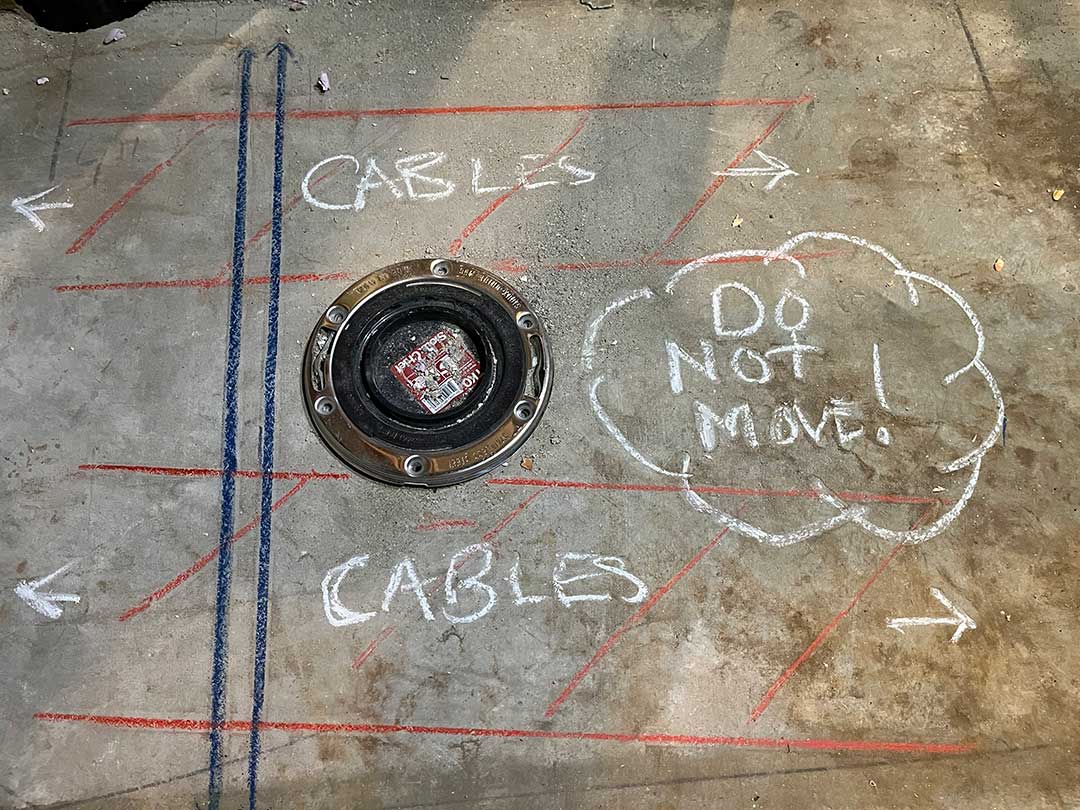
Cored plumbing penetration with post-tension cables marked DO NOT MOVE
★ 5.0
Google reviews
5,000+
Jobs documented
2
States served
0
Cores drilled blind
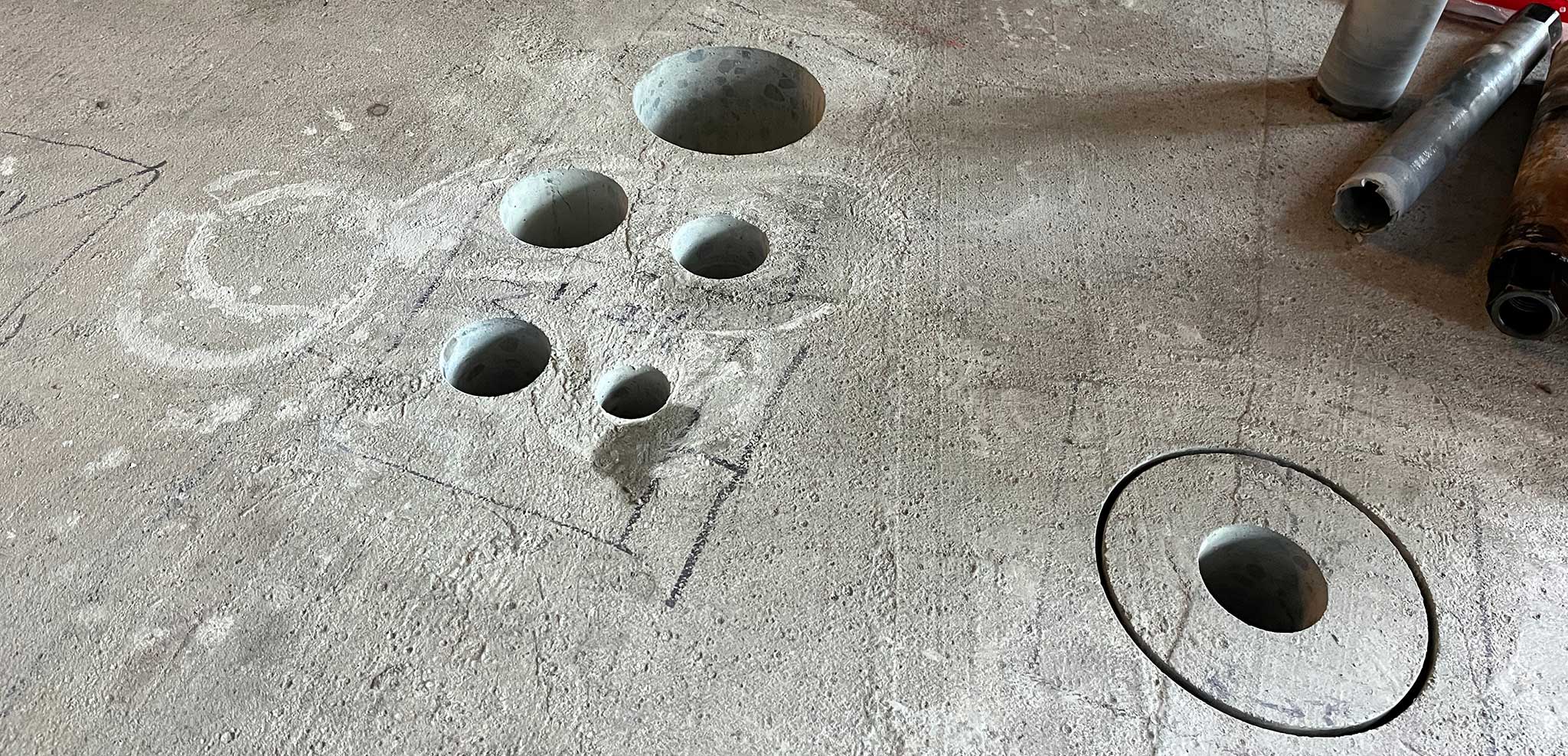
Clean concrete core holes in a range of diameters drilled through a scanned slab
OUR WORK · MULTI-SIZE CORE LAYOUT, ONE SLAB
What it is

A clean, exact hole: in exactly the right place.

A diamond core bit cuts a precise circular opening through slabs, walls, and decks, and a GPR scan decides where it’s safe to cut before the rig is ever anchored.
01

How it works

The rig anchors to the surface, and a diamond-tipped core barrel cuts a smooth cylinder through concrete, rebar, brick, or block. Any diameter the penetration calls for, from a small anchor hole to a large mechanical opening. Most work is wet-cored: water cools the bit and holds the dust down, and the slurry leaves with us, not down your drain.

02

Why the scan matters

Slabs hide things: rebar, electrical conduit, radiant heat, and in elevated decks, post-tension cables under thousands of pounds of load. Cut one and a clean hole becomes a structural repair or a life-safety incident. Our concrete scanning crew maps the exact core footprint first, so every hole goes where the slab says it can.

Scan-then-core

Most outfits core blind. We never do.

Core drilling and concrete scanning are usually two different companies: a scanning sub one day, a coring crew another, and a gamble whenever the schedule squeezes the scan out. RainierGPR is a GPR company that cores: the same crew scans every core location and drills it, in the same visit.

THE INDUSTRY DEFAULT

Core blind, or wait on a sub

  Scanning skipped when the schedule slips
  Separate scan sub, two mobilizations, two invoices
  Rebar, conduit & PT cables are the driller’s guess
  A strike becomes your change order, or worse
THE RAINIERGPR WAY

Scan and core: one crew, one visit

  GPR scan of every core location before the rig anchors
  Rebar, PT cables & conduit marked on the surface
  Layout confirmed with you before the bit touches concrete
  One visit, documented, scan record to finished core
What we core

Every penetration a building needs.

From a one-inch anchor hole to a large mechanical opening: slab-on-grade, elevated deck, wall, or column, cored exactly where the trade needs it.

Plumbing & waste lines
Supply, waste & vent penetrations through slabs and walls
SLAB · WALL
Floor drains
Drain bodies & trench-drain tie-ins, sloped decks included
SLAB
Electrical & data
Conduit banks, panel feeds & riser penetrations
SLAB · WALL
HVAC & mechanical
Duct, pipe & refrigerant-line openings, any diameter
SLAB · WALL
Anchor & dowel holes
Epoxy dowels, equipment anchors & baseplate holes
SOG · DECK
Handrail & guardrail cores
Clean post cores in stairs, ramps & balconies
STAIR · RAMP
Elevator & shaft work
Pit, shaft & hoistway penetrations, engineer-coordinated
STRUCTURAL
Vents & sleeves
Through-wall vents, pipe sleeves & sample cores
WALL

Slab-on-grade or elevated deck changes what we scan for. Under a ground slab the risk is buried utilities (we locate those too); in an elevated deck it’s post-tension cables and conduit. Either way, the scan comes first.

How it works

Scan. Core. Clean.

01
GPR FIRST

We scan

Every core location gets a GPR scan before the rig comes off the truck. Rebar, post-tension cables, conduit, and radiant heat get marked on the surface, and the layout is confirmed with you. Moved an inch or two if the slab says so.

02
DIAMOND BIT

We core

The rig anchors, and a diamond core barrel cuts a clean, exact cylinder, the diameter the trade specified, plumb and on layout. Wet coring keeps dust out of the air and the slurry contained, even in occupied buildings.

03
BROOM CLEAN

We clean

Cores come out, slurry gets vacuumed, and the area is left broom-clean and ready for the next trade. You get the scan record and the documentation for the GC, the engineer, and the permit file.

Real jobs

Cores from the field, not stock photos.

Chalked layouts, marked cables, and clean penetrations from real core drilling jobs. Every photo on this page is documented RainierGPR work, our crews, not a stock library.
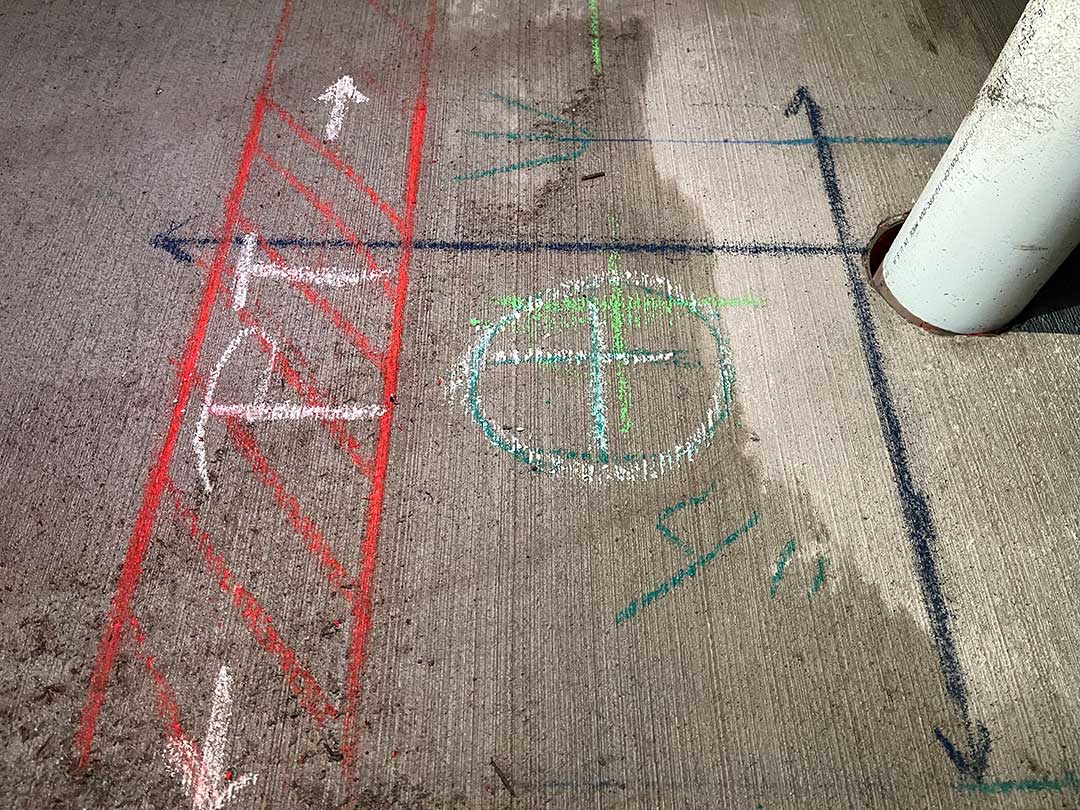
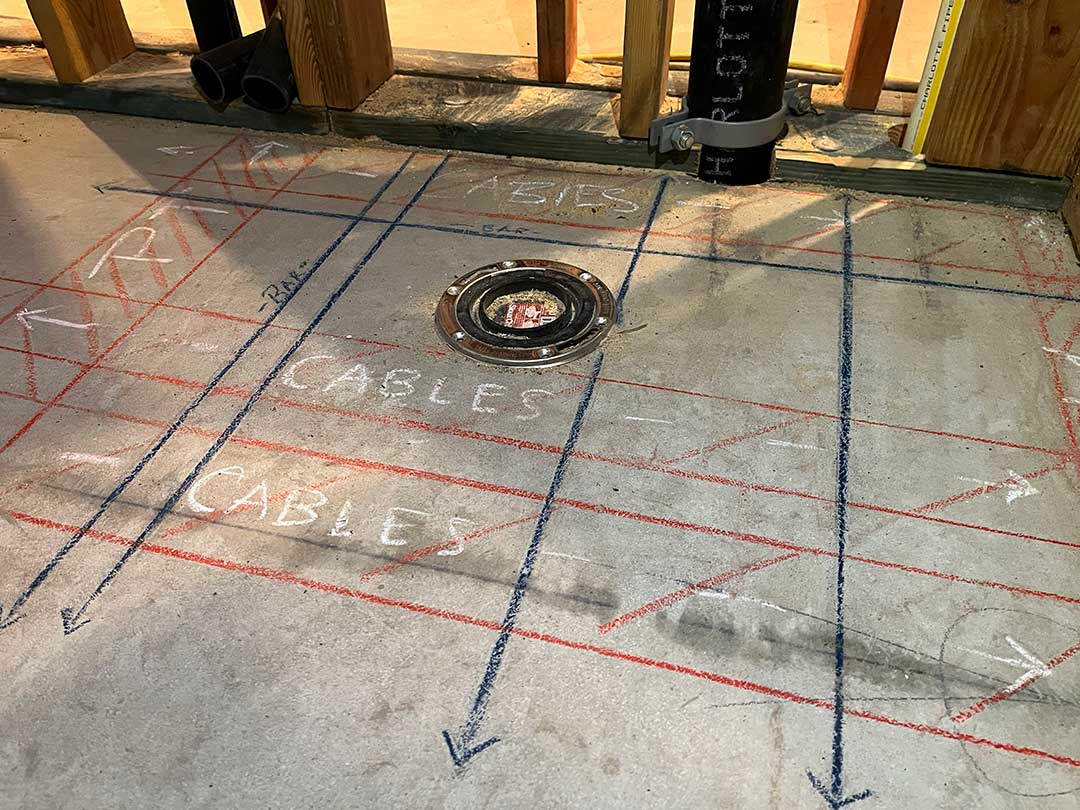
Cored plumbing riser penetration through a post-tensioned deck with GPR layout marks

Plumbing riser cores

SCAN-THEN-CORE · COMMERCIAL PLUMBING
Cored drain flange in a scanned slab with post-tension cables chalked around it

Drain & flange penetrations

CORED PENETRATIONS · SCANNED SLAB
What contractors say

A 5.0-star crew, in their words.

★★★★★

Matthew & Sam did an outstanding job doing an x-ray analysis and core drilling at a multi-family parking garage. They explained the scope of work thoroughly, executed the job efficiently, and operated with the utmost professionalism. The business owner, Tony, was easy to work with, very responsive, and reasonably priced. I highly recommend Rainer GPR!

BEHRANG A. · GOOGLE REVIEW
★★★★★

Matthew and Sam came out and did a wonderful job, clean, concise and very knowledgeable on what needed to be complete. I use Rainier for all my scanning and coring needs

RYAN S. · GOOGLE REVIEW
★★★★★

Rainier GPR were great to work with! I was in a bind needing concrete scanned and cored they came out on time, clean , safe, and timely. Will definitely use their services from now on!

OMAR D. · GOOGLE REVIEW
What it costs

Straight talk on price.

A scanned core costs barely more than a blind one, and nothing like what a severed post-tension cable costs. We quote every job before we roll a truck, scan included, and one avoided strike pays for the whole visit many times over.

TYPICAL CORE DRILLING VISIT
$650 $1,750
  How many cores & what diameters
  Slab-on-grade vs. elevated post-tensioned deck
  Access, height, occupied-building & after-hours work
  Scan scope, core footprints only vs. full-area mapping

Ranges are typical, not a quote. Tell us the count, the diameters, and the deck type and we’ll give you a real number, usually the same day.

Core drilling, in plain terms

How wide, how deep: and why we core wet

Concrete core drilling covers more range than most people expect. Typical cores run from about one inch to twelve-plus inches in diameter (small enough for an anchor bolt, big enough for a duct) and with barrel extensions we core through thick structural pours, footings, and walls. Most work is wet-cored: water cools the diamond bit, keeps silica dust out of the air, and turns the cuttings into a slurry we contain and remove. Where water can’t go (finished interiors, live electrical rooms) dry coring with HEPA dust extraction does the job instead.

What separates one coring outfit from another isn’t the hole, a sharp bit cuts a round hole for anybody. It’s what happens before. In Seattle’s mid-rise decks and Orlando’s post-tensioned condos alike, the slab is full of things that must not be cut, and the record drawings rarely tell the whole story. Our crews have been cutting and coring concrete for over two decades, and every one of those cores starts the same way: ground penetrating radar over the exact core location, the findings marked on the surface, and the hole moved if the slab says to move it. That’s the whole reason RainierGPR cores, the scan and the core belong to the same crew.

WHAT WE CORE EVERY WEEK
  Plumbing, waste & supply penetrations
  Floor drains & trench-drain tie-ins
  Electrical conduit banks & panel feeds
  HVAC duct & refrigerant-line openings
  Anchor, dowel & handrail cores
  Elevator, shaft & structural penetrations
  Vents, sleeves & sample cores

Coring soon? Call WA (360) 584-0401 · FL (407) 493-3525, or read the answers below.

Questions before you book

Core drilling, answered straight.

Yes: every core location, every job, no exceptions. A technician scans the exact footprint of each hole with ground penetrating radar, marks the rebar, post-tension cables, and conduit on the surface, and only then does the rig anchor. It’s not an add-on we sell; it’s how we core. Scanning and coring are the same crew, so the scan never gets squeezed out of the schedule.

Most visits run $650 to $1,750, depending on how many cores you need, the diameters, the deck type, and access. The GPR scan is included in the number we quote, we don’t core without it. Tell us the count, the sizes, and what the building is, and we’ll give you a real number before we roll a truck, usually the same day.

Typical cores run from about one inch up to twelve-plus inches in diameter, and larger openings are handled with multiple cores or saw cutting. Depth is rarely the limit: with barrel extensions we core through elevated decks, thick slabs, footings, and walls. If you have a spec, send it over; if you don’t, tell us what has to pass through the hole and we’ll size it.

Wet coring is the default: water cools the diamond bit, keeps crystalline silica dust out of the air, and turns the cuttings into a slurry we contain and vacuum out. Where water can’t go (finished spaces, live electrical rooms) we dry-core with HEPA dust extraction. Either way, the mess leaves with us.

Cleanup, always: cores removed, slurry vacuumed, and the area left broom-clean for the next trade. Patching depends on the job: on most projects the trade that runs pipe or conduit through the hole seals its own penetration, but if you need us to handle the patch, say so when you book and we’ll price it into the quote.

Yes, a large share of our coring is in occupied and finished spaces. Core drilling is rotary, not percussive, so it’s far quieter and lower-vibration than breakers, and wet coring with slurry control keeps dust out of the air. We schedule around tenants, work after-hours when the building needs it, and protect the finishes around the hole.

Then you find out before it’s cut, that’s the whole point. Usually the fix is shifting the core an inch or two, and we confirm the move with you on the spot. If a hole absolutely must cut structure, that becomes an engineer’s call, made with a scan image in hand instead of after a severed cable.

Next-day scheduling is standard in both the Seattle and Orlando metro areas, and same-day is often possible for a time-critical pour or trade schedule. Call the local line and ask. WA (360) 584-0401 · FL (407) 493-3525.

Different risks, same discipline. In a slab on grade the danger is what’s under and in the slab (buried electrical, plumbing, and radiant heat) so we scan the slab and can locate the underground utilities beyond it too. In an elevated deck it’s post-tension cables and embedded conduit, where one cut can be catastrophic. Both get scanned before the bit touches concrete.

One crew, one visit

Scan it. Core it. Move on.

Send us the core count, the diameters, and the deck type: we’ll quote it same day, scan included, and have a crew on site as soon as next-day.
5.0 ★ GOOGLE · WA + FL · NEXT-DAY SCHEDULING