Private underground utility locating with ground penetrating radar and electromagnetic locating. We find the water, sewer, gas, electric, and communication lines, including the private ones 811 never marks, and paint them on the ground before you dig, trench, or bore. Serving all of Washington from Seattle and the Orlando metro in Central Florida, typically next-day.
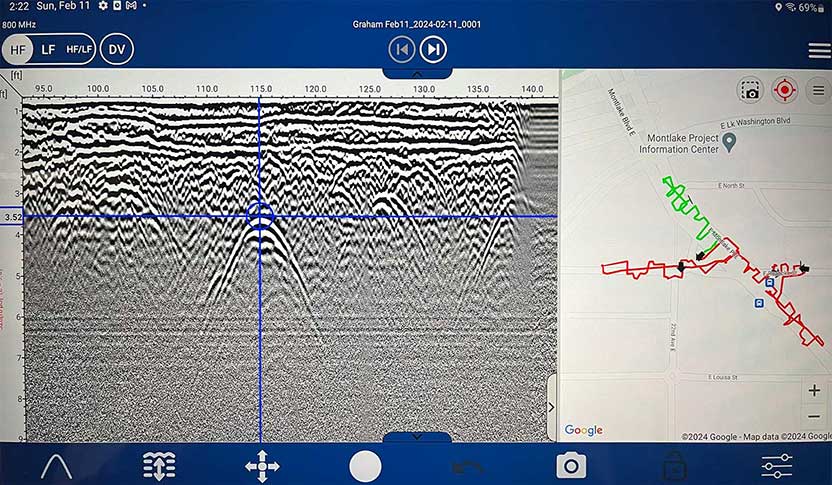
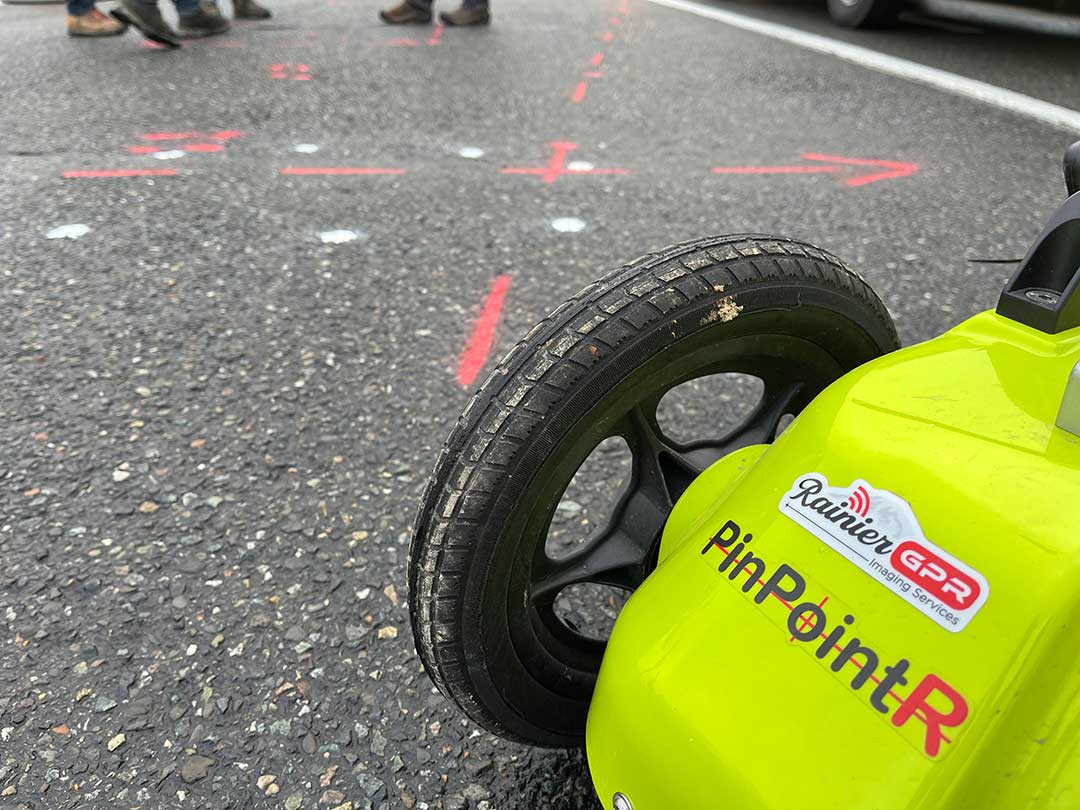
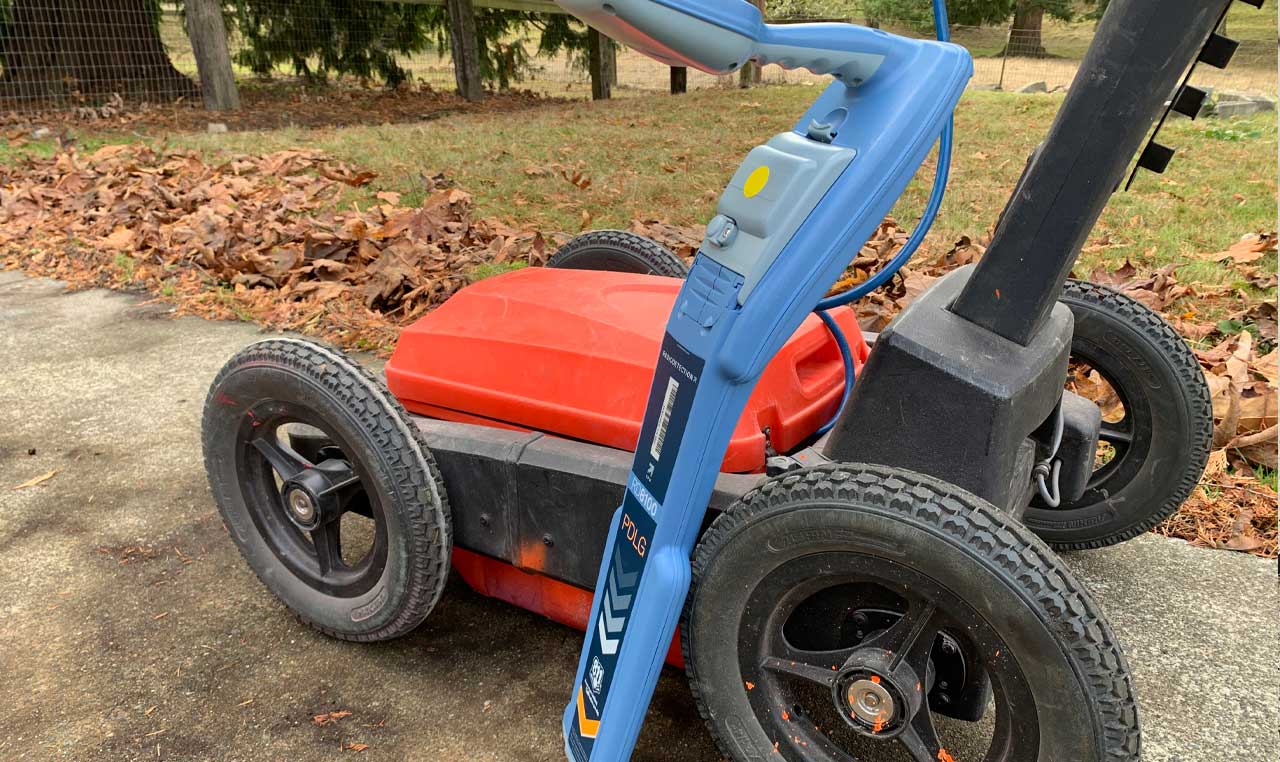
A map of what’s under the dirt: before you break it.
How it works
We combine two tools. Electromagnetic locating traces conductive lines (power, metal pipe, and tracer-wired utilities) by their signal. Ground penetrating radar fills in everything else: PVC, concrete, clay, fiber, and even abandoned lines that carry no signal at all. Together they build a full picture, marked on the surface in APWA color code.
Why it matters
A single strike shuts a job down. Cut a live power line and it’s a safety incident; hit a gas line and you’re evacuating the block; nick fiber and the change order runs into five figures. Locating first is the cheapest insurance on the site. A couple of hours that keeps an excavator out of a line nobody knew was there.
811 marks the public lines. We find the rest.
811 is free, required by law, and it works, for public utilities. Call it, and the utility companies mark their lines from the main to your meter. Everything past the meter is yours, and it’s invisible to 811. That’s where most strikes happen, and that’s exactly what we locate.
Public lines to your meter
Everything past the meter
Every buried utility: marked in APWA color code.
We paint located lines on the ground in the same uniform color code your crews already read, so the site is safe to dig the moment we leave.
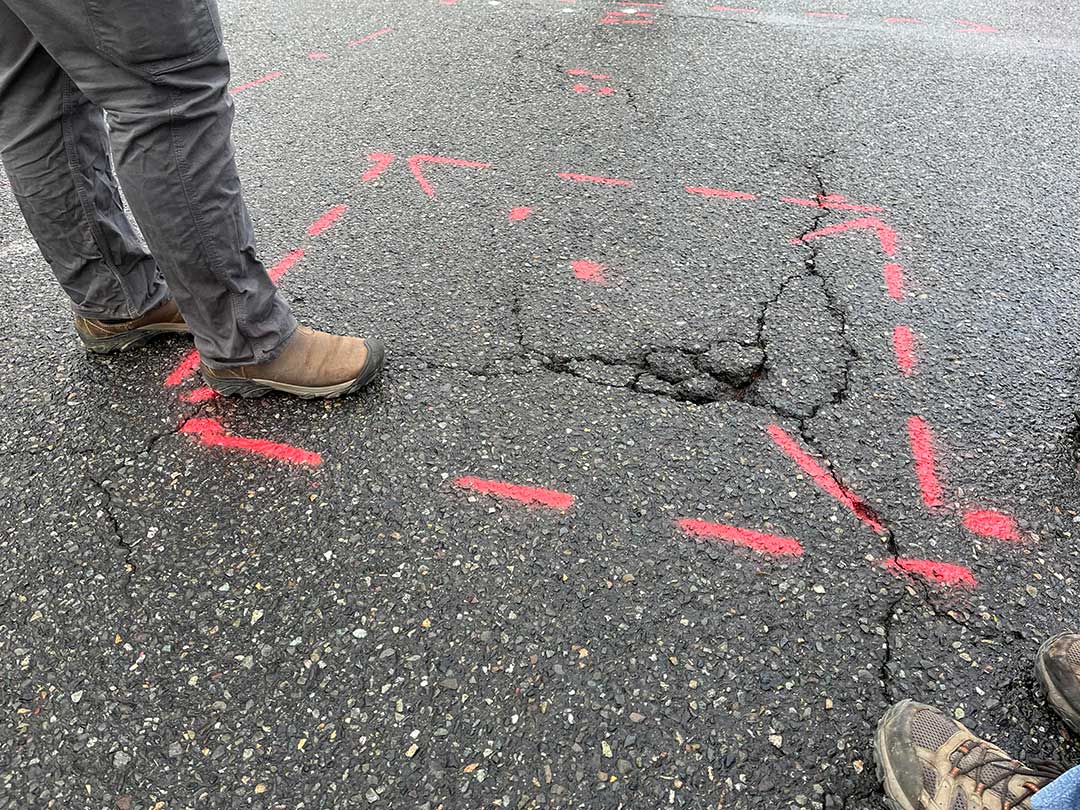
Locate. Mark. Map.
We locate
A technician sweeps the site with GPR and electromagnetic locating, tracing every line and reading depth live on-site, public and private, conductive and non-conductive.
We mark
Every located line goes onto the ground in APWA color code with depth notes, so your crew can trench, bore, or dig with the whole map painted in front of them.
We map
You get a documented record of what we found and where: marks on the ground for the crew, and a report for the GC, the engineer, and the permit file.
Locates from the field, not stock photos.
A few recent utility-locating jobs. Every one is documented, real RainierGPR work, not a stock library.
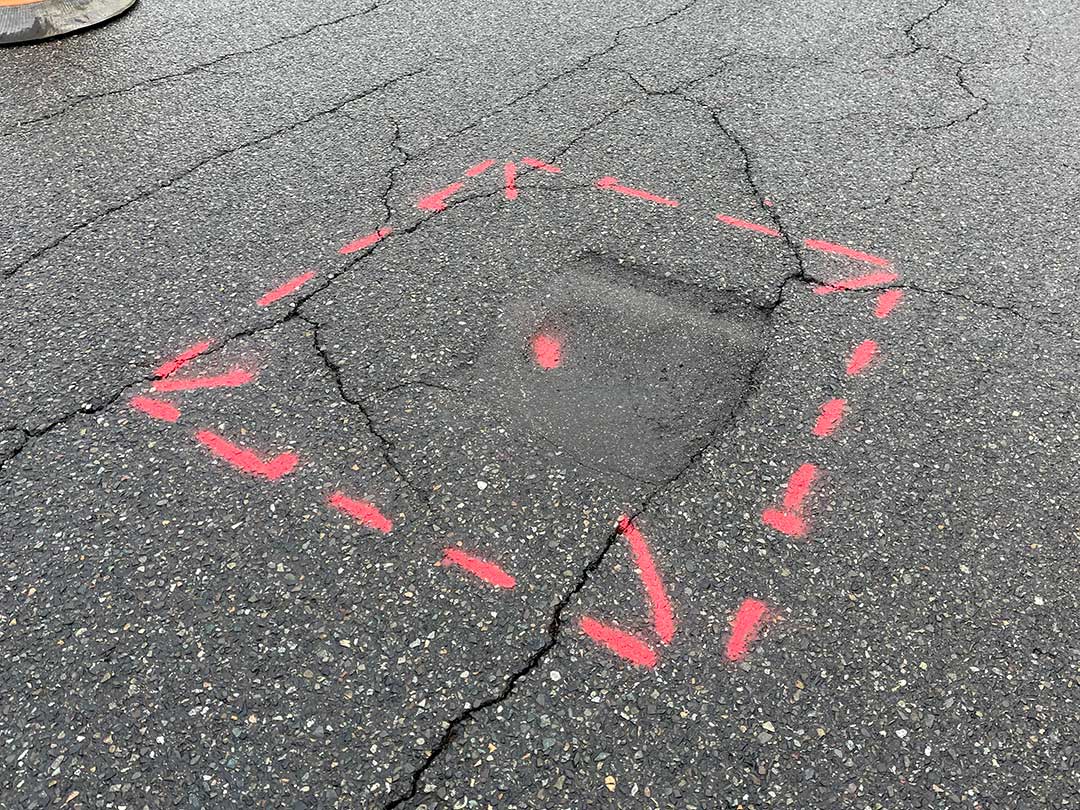
SR-405 interchange

St. Mark’s Cathedral
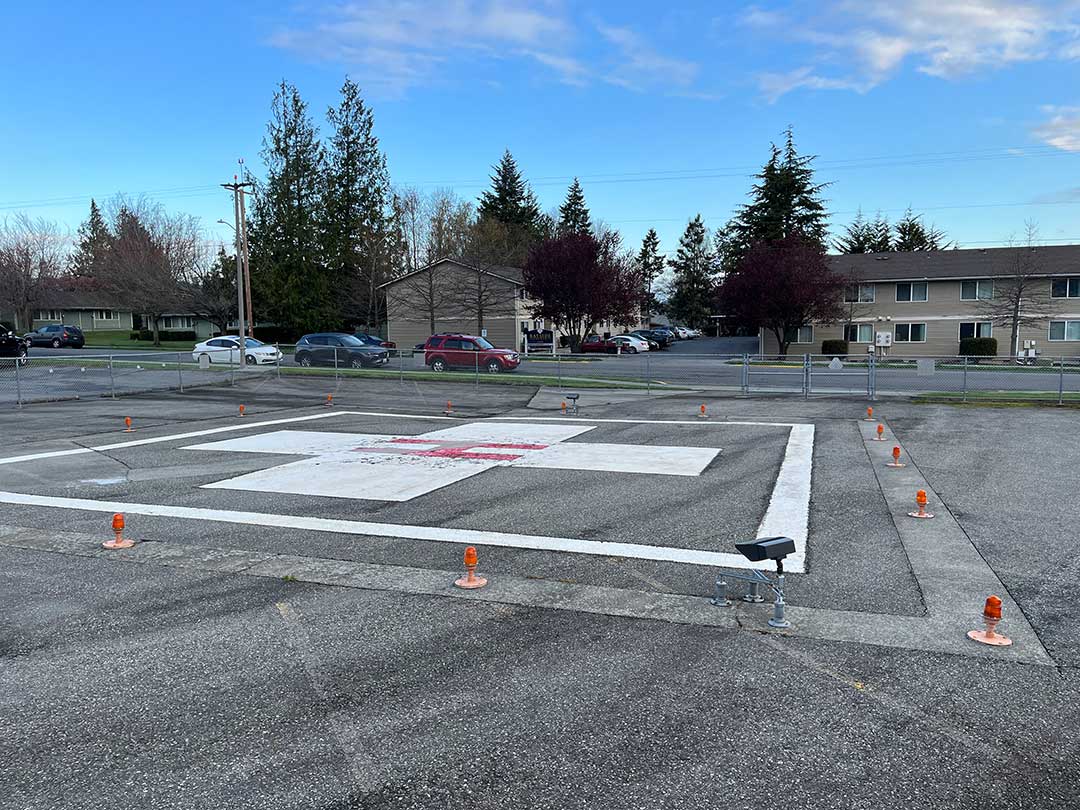
Helipad relocation
A 5.0-star crew, in their words.
Rainier GPR came out and located some mystery runs of pipes and buried wires under a slab. (An old DIY radiant heat floor) They were extremely easy to work with, and relatively cheap considering what it saved us in the long run. THANKS!!
Would give 10 stars if I could! We had Tony scan a project with an unknown amount of utilities under the slab, he is very professional, did an extremely thorough job, and to top it off he is just a great guy to work with! We can now cut the concrete safely and with confidence. Rainier GPR is the only scanning company I would recommend.
Landry was very good at locating. Very helpful explaining the process and results.
Straight talk on price.
A private utility locate costs a fraction of a single strike. We quote every job before we roll a truck, and one avoided line (power, gas, or fiber) pays for the locate many times over.
Ranges are typical, not a quote. Tell us the site and we’ll give you a real number, usually the same day.
Two markets, one standard.
How deep we see: and how we find what carries no signal
Underground utility locating combines two methods because no single tool finds everything. Electromagnetic locating induces a signal onto conductive lines (power, metal pipe, and any utility with a tracer wire) and traces it from the surface, giving fast, accurate paths and depth on the majority of a site. Ground penetrating radar covers the rest: PVC water and sewer, fiber, clay pipe, and abandoned lines that carry no current at all. In typical Pacific-Northwest and Central-Florida soils we commonly locate utilities from about three to eight feet deep, deeper in dry sandy ground and shallower in wet clay.
The reason to call before you dig is simple: the record drawings are almost never complete. Private lines get added over decades: a run to a new garage, a gas line to a pool heater, an irrigation loop, a fiber drop, and none of it shows up in the utility company’s map or in an 811 ticket. We build the real picture on the day of the dig, mark it in APWA color code, and hand you documentation you can put in the file. It’s the difference between trenching with a map and trenching on faith.
Digging soon? Call before you dig, WA (360) 584-0401 · FL (407) 493-3525, or read the answers below.
Utility locating, answered straight.
Locate it before you dig it.
Send us the site and we’ll get you a real quote, usually same day, and a crew on site as soon as next-day.